Aberdeen's identity shifted irrevocably in December 1969 when oil was discovered beneath the North Sea. Within a decade, the Granite City had become the offshore oil capital of Europe, replacing its traditional industries with a global energy economy that reshaped its landscape, population, and prospects.
The Granite City Before Black Gold
Before the arrival of North Sea oil, Aberdeen's economy rested on industries that had sustained it for centuries. The city was Scotland's premier fishing port, with shipbuilding, papermaking, textiles, and granite quarrying forming the backbone of local employment. Aberdeen's distinctive grey granite, quarried locally and exported worldwide, earned it the nickname the Granite City; the stone was once one of Britain's largest exporting industries. The harbour on the River Dee had been continually improved over generations, serving as a vital trading and fishing hub for the north-east.
The Discoveries That Changed Everything
The transformation began in December 1969, when Phillips Petroleum discovered oil in the Ekofisk field in Norwegian waters and Amoco struck oil at the Montrose Field, approximately 217 kilometres east of Aberdeen. The giant Forties Oil Field was discovered by BP in October 1970, followed by Shell Expro's Brent oilfield in 1971. Further discoveries came rapidly: the Piper field in 1973, and the Statfjord and Ninian fields in 1974.
The 1973 oil crisis, which quadrupled world prices, made offshore production far more economically viable. First oil flowed from the Argyll and Duncan fields in June 1975, followed by the Forties field in November of the same year. The 1979 oil crisis tripled prices once again, reinforcing the North Sea's importance and accelerating Aberdeen's growth as an energy hub.
A City Rebuilt: Infrastructure and Industry
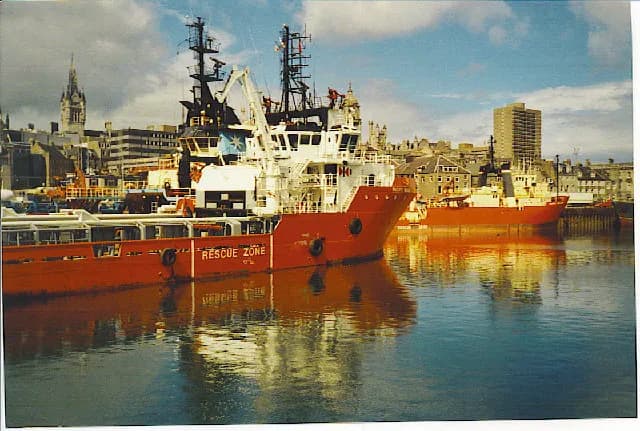
Aberdeen's strategic position on Scotland's east coast made it the natural logistical and supply centre for North Sea operations. The city allocated approximately 800 acres of industrial land to attract oil technology-related industries, and over 200 new companies established themselves in the area. Aberdeen Heliport grew into one of the busiest commercial heliports in the world, while the harbour expanded to accommodate oil service vessels and offshore support operations. New housing, offices, and schools were constructed to support the influx of workers and their families.
Population, Prosperity, and Price Crashes
The oil boom brought thousands of foreign residents to Aberdeen and attracted substantial inward investment. The city's population grew from 212,125 in 2001 to 222,793 in 2011, reflecting decades of expansion driven by the energy sector. In 2012, HSBC recognised Aberdeen as a leading business hub and one of eight "super cities" driving the United Kingdom's economy.
Yet the industry's dependence on global prices brought volatility. The sharp decline in oil prices beginning in 2014 caused significant job losses across the region and exposed the risks of an economy tied to a single commodity.
The Next Chapter: Diversification and Renewables
Today, Aberdeen remains a significant centre for oil and gas, with the North Sea still holding an estimated 12 to 24 billion barrels of oil equivalent. Aberdeen Airport is the world's busiest hub for heavy instrument flight rules helicopters, transporting approximately 500,000 passengers annually for offshore operations.
At the same time, the city is actively exploring renewable energy resources as part of a broader effort to diversify its economy. The transition from fishing boats to oil rigs may yet give way to a new era of offshore wind and clean technology, continuing Aberdeen's long history of adapting its maritime strengths to the demands of the age.